



-

Twenty-foot walls of water, stomach-turning heaves, pbj sandwiches lost at sea. These are the trials and tribulations of one man´s quest to capture the Giant Squid, found off the shores of New Zealand.
WorldHum has just released an excerpt of David Grann´s new book, The Devil and Sherlock Holmes, a compilation of Grann´s travel essays. This particular excerpt is from a tale of Steve O´Shea, who continues to battle the seas, rain or storm, to capture this notoriously elusive creature. This is only one of 12 tales that are, in themselves, quests to understand the human condition of obsession. Other stories are about arsonists, murderous racists in prison, and con-artists — each one with its own insight into details of obsession.
Well, it captured my attention.
-

You find yourself paddling a lagoon in the Dr. Seussian islands, about 20 kilometers northwest of Phuket, Thailand. Few words have entered your mind since you began; perhaps none of your vocabulary matches the kind of tranquil beauty around you. That is, until you notice your arms begin to tire from paddling your kayak for the last few hours.
Your thoughts turn inward, dismissing the nearby beauty for thoughts of lactic acid buildup and why you chose that last bender over a workout. You look down and the reason is slapping you in the face: the damn boat isn’t blown up all the way. Heading through the final cave on your way back to the boat, your arms are a thousand pounds and you’re getting more pissed with every paddle. We’ve all been there, you begin to hate everything — the guide sucks for not filling up your boat, the water isn’t clear enough, caves blow, kayaking is stupid, screw Thailand.
Fuming, you finally reach that pinhole of light that you’ve been plodding towards in the stupid cave. When you finally reach it, the passage isn’t much bigger than when you first saw it at the far end of the cave. You lean forward to squeeze through.
Then it hits you, not the cave walls, but the reason you’re sitting three inches below the waterline. If the inflatable kayak was totally full, you would never fit. Those three inches give you just enough room to pass through the narrow opening and head to a hidden lagoon sanctuary. Now, that’s something you should work for.
Kayaking Phuket and the surrounding islands is just one way, inflated entirely or not, to see the gems this area has. The New Zealand Herald recently published an article about finding some refuge among the onslaught of tourists there. Although, you may have to work for it (kayak), roll with it (bike), or climb it (elephant), there are still many corners of solitude to experience the draw of Phuket. (more…)
-
If I had to come back to life as a revolutionary Brazilian Tropicalismo/Samba musician and five-time grammy award-winner who has been featured in a Pedro Almodóvar movie, I’d totally pick Caetano Veloso. (I was going to go with David Bowie, then I realized he fit none of these categories.)
In celebration of yesterday’s release of Caetano’s new album, “zii e zie” (“uncles and aunts” in Italian), we’re listening to a live track from the album, “A Cor Amarela,” as part of TheExped music series.
Backed by a sprite band half his age, the Brazilian legend’s sound in his latest offering is what has been described as “arid, compressed, a little lean, so that each strategic embellishment — a funk-informed bass line, a coughing fit of distorted guitar — displaces molecules in the air.”
How often do you get to see a living legend perform, anyway? Beginning April 8, Caetano goes on tour, with stops in New York, D.C., Boston, L.A., San Fran, and Miami. For the full list of dates click here.
-

A recent article in the NY Daily News lists the top ten places to reinvent yourself based on the Lonely Planet´s suggestions. That is, if you are experiencing a midlife crisis and are upper middle class with some cash to blow.
To me, the list appeared a little more than extravagant. It serves as a reminder that the world of travel for existential young professionals is about achieving their same luxuries, just outside of their own country. As an example, one of the recommended places to ¨reinvent¨ one´s self is to go shopping in Dubai - a city that is the epitome of excess, where 25 tons of gold is displayed in jewelery-shop windows.
Feeling a little flabby or floppy? Why not go to Southeast Asia and nip/tuck away your low self-esteem, then recuperate on a resort, sipping on a Singapore Sling?
Although every single destination would be culturally interesting, this list seems to appeal to those who wish to travel without feeling foreign.
This type of travel will always exist, but should we look up to it, as if that is our ends to a career-oriented lifestyle?On the bright side of tourism, I have a lot of respect for the people I have met on my travels: Those in a quarter-life crisis, who have no money but an open mind. Perhaps their midlife crisis will be avoided.
-

It’s always a little odd the first time you cross into another country — especially an English-speaking one — and suddenly find yourself surrounded by a completely different culture and unfamiliar language. This happened to me crossing from English-speaking South Africa — where many neighborhoods could easily be mistaken as outliers of Phoenix — into Portuguese-speaking Mozambique, where my feeble Spanish-language skills were no match for those seemingly garbled constructions thrown at me in the passport office.
Driving into the country, the influence was immediately apparent. As I bit into a pãozinho and watched as open-air schoolyards surrounded by pastel-colored, stucco buildings (that could easily have been home on the shores of the Atlantic) passed by, I thought about how you could travel almost anywhere around the world and likely run into the remnants of what was once Portugal’s vast empire. From Macau, India, Angola, Mozambique, Brazil, French Guinea, Barbados, to even the Canadian Maritime, Portugal’s influence is hard to avoid.
But what about the homeland? Though its empire has slowly been receding (China took back Macau in 1999), Lisbon itself has been undergoing something of a renaissance, landing on many of those “Top Places to Visit” lists, and even getting a little indie-cred with the rock-and-roll set (Animal Collective’s Panda Bear calls Lisbon home). This week, the the SF Chronicle visits Lisbon, stopping by the newly-opened Museum of Design and Fashion, roaming hip Santos for new designs and a few drinks, and discovering how the once “sleepy, inward-looking, dowdy, Lisbon,” a city known for not changing, finally has.
-

What does one do when thrust into the unexpected situation of teaching a class of 57 children in the capital of the Philippines? Why, sing, of course.
A trip to the Philippines is always an education, but this time I’d planned on taking things easy. Rather than sail out into the wilderness and explore some of the 7,000-plus islands that make up the archipelago, the idea was simply to stay put in the capital, visit some friends, grab a few bargains in the vast malls and generally avoid the unusually harsh European winter.
It isn’t long, however, before I’m tempted out of my 35th-floor hideaway in the grandly named Global City district of Manila (once the site of a vast American military base called Fort Bonifacio, today it is an upmarket assemblage of corporate skyscrapers, plush apartments and overpriced restaurants) and into the altogether wilder environs of neighboring Taguig.
I hand the taxi driver a piece of paper with the scrawled address of the Captain Jose Cardones Elementary School — where I’m meeting a friend — and he assures me he knows exactly where to go. Soon he’s stopping every few minutes, thrusting the note at every other pedestrian, “just to check, sir.” Meanwhile I sit helplessly in the back, watching the meter tick up and wondering why I still fall for this trick after so many years. (more…)
-

* Disclaimer: TheExpeditioner.com hereby takes no responsibility for your imprisonment or diplomatic incident you cause as a result of mimicking any of the following actions described in this article.
As a writer I think I’ve acquired some questionable thought patterns. Where my mind used to say, “That’s illegal, so don’t do it.” It now says, “Do it. If you get arrested in a foreign country, it’ll be a great story and you’ll have something to write about other than the hostel’s relaxed atmosphere.”
Being mostly ignorant of England’s laws, I’m not exactly sure as to the legality or illegality of what I did. I started to lean towards illegal when the first Brit I approached told me, “You can’t do that! It’s a criminal offense to do that! Especially don’t do it in front of the poppers (British for police).”
But I think this guy was being a bit of a worry-wort. Or as the British say, an old fuddy duddy. I think what I was doing could fall into a moral or legal gray area than an actual criminal offense. Everyone else I approached was either apathetically uninterested in what I was offering, or enthusiastically hailed me as a hero. In any case, what I did earned me some serious poundage.
Let’s be clear. I was not “________” (insert whatever lewd act you have been thinking I was doing here).
Here’s what actually happened. (more…)
-

When you are a travel writer, you are living in two worlds. One world is based on the existential experience of belonging: finding out where you belong or how things belong. The other world is finding words to express that which you have discovered. Without one, you would not have the other, and most of the time, the worlds are conflicting. This existential dilemma is what Tom Swick poignantly and poetically outlines in his article at WorldHum. This thought came to him whilst seated, by himself, on a plane, looking at couples and families preparing for relaxing vacations and, essentially, not altering their normal lifestyle, just transferring it:
The travel writer, when thought of at all, is regarded as a charmed figure, never stymied in front of a customs officer or a computer screen. The travel writer, when he reflects, sees himself as aimless, clueless but nevertheless underappreciated.
The travel writer in the days of yore had a difficult task, but a different one. He would relay investigative information - perhaps from an ethnocentric perspective — back to his country, back to his home. Today, as Swift observes, the travel writer is faced with a difficult task, too: to find meaning in differences. He infers that YouTube and the increase in techno-travel blogs have made the basic travel book borderline obsolete. Perhaps it is the decline of travel literature as a marker of the travel writer´s introspective crisis. Despite being nearly moved to tears due to his heartbreaking accuracy, I found optimism in Swift´s words. Travel writers are faced with a challenge and maybe they will flounder or maybe the term will disappear from oversaturation. Yet, there is something in sharing experiences - with whoever will read them - that differs from merely seeing something from a tourist´s perspective, it is something worth writing for. As Swift´s article closes:
The travel book itself has a similar grab bag quality. It incorporates the characters and plot line of a novel, the descriptive power of poetry, the substance of a history lesson, the discursiveness of an essay, and the—often inadvertent—self-revelation of a memoir. It revels in the particular while occasionally illuminating the universal. It colors and shapes and fills in gaps. Because it results from displacement, it is frequently funny. It takes readers for a spin (and shows them, usually, how lucky they are). It humanizes the alien. More often than not it celebrates the unsung. It uncovers truths that are stranger than fiction. It gives eyewitness proof of life’s infinite possibilities. This is why you write it.
-
Ever have those sleepless nights, laying in bed, wondering to yourself what post-earthquake Haiti would look like through the eyes and ears of a “Planet Earth” producer? Well here’s your chance.
-
I had no idea I could be compensated for a delay. I thought delays were just part and parcel of taking the plane, domestic and international. Apparently we have rights as travelers, something worth considering when sitting for an overnight delay or last-minute cancellation. You could get a food voucher! I would be interested to know for which place (and, slightly frightened, to know).
The Wall Street Journal has this handy chart explaining the differences between the E.U., U.S. and Canada when it comes to ¨passenger rights.” I am all for compensation when it comes to outrageous delays. It helps to smooth the tension over. However, there appears to be a dilemma: if more ¨rights¨ are put in place by the government, the poor multi-billion dollar airline companies will lose more money forcing them to make cutbacks or even drop out of business.
Is it just me? Although I find legislating ¨compensation-rights¨ a little overboard, shouldn´t the company just do a better job taking care of their customers? I know that unexpected things happen, but isn´t it the business of business, especially in the airline industry, to provide the best service possible? What ever happened to business integrity? Why am I asking so many questions?
-

Contributor Luke Armstrong heads off to Western Europe from Guatemala today. After he arrives he’s going to, well, who knows (especially not him)? He’ll be sending us dispatches along the way (if he makes it).
Dear Readers,
Eight months ago today seemed very far away. It seemed, like, months away. Eight months ago I had a few hours of free time. And as the mother who raised me knows all too well, free time for me tends to lead to things like kidnapping the neighbor’s cat in a lunch box and hiding it in a toy box for three days. (I was ten, mom. I’m sorry. Can I be un-grounded now?).
Anyways, eight months ago, I was doing what any good traveler does with their free time: look for cheap flights online. I typed in random dates and random locations to see the price. Living in Guatemala, flights to Europe tend to be well out of my price range. When a $600 flight from Guatemala to London and flying back from Madrid popped up, I took out my credit card and booked it before this unheard of price evaporated into the web’s vast abyss.
That was eight months ago. Today I am boarding a plane for London. Once there I plan to . . . I have no idea what I am going to do. I know what I am not going to do. I am not going to stay in London that long. On some scratch paper I made a tentative plan of where I want to go: (more…)
-
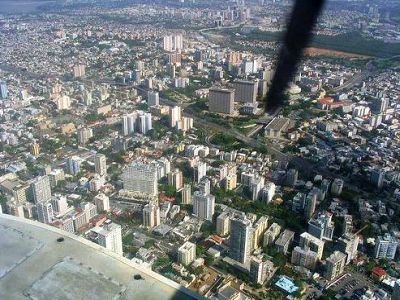
You didn’t hear? Thursday is the new Wednesday. (At least in travel-deal land here at TheExpeditioner.com.) I present the first installment of Thursday Travel Deals, brought to you bright and early every Thursday from here on out. Like “Wednesday Travel Deals,” just more Thursdayey.
NYC to Puerto Rico for $213 (incl. taxes/fees): This deal from Fly.com is a great price, and a quick search on the site looks like it has plenty of flights beginning in late April.
San Fran to Seoul for $722 (incl. taxes/fees): Air Canada is offering up this discounted flight but, in the words of that guy that sells the Snuggie on t.v.: Act Now! (sale ends March 31st.)
Las Vegas as Cheap as $291/night: Kids, when Frommer talks, you should listen. As he recently predicted, rooms in Vegas have dropped to Rat Pack-era rates. I guess this is what happens when six thousand extra rooms open up in the middle of a recession-racked city.
Rooms can be found for as low as $29/night at the Hooters Casino Hotel (they have a hotel?), $31/night at the Sahara, and $69/night at the Palms. Hey, it’s not like you you have to (or actually are going to) actually spend much time there. It just beats hiding your luggage under the craps table. Click here for a list.
-

It’s funny how life weaves experiences and occurrences together so seamlessly. Just the other day I was talking with my ex-pat roommate about his imminent return to the U.S. He left home nearly 3 months ago and, using Buenos Aires as his base, went on a little spin around Latin America. He also told me that he is thinking of taking his last week to go to Cuba (so he can rest from his vacation).
This got me thinking: I have always wanted to go to Cuba but never wanted to stay in a resort. I had heard of homestays, but then I had difficulty finding a travel bud who wasn’t brainwashed by North American media. Then an article from the UK Times popped up in my inbox — thanks Matt — and it gave a trip to Cuba the little nudge it needed to be reconsidered.
The article talks about La Isla de Juventud — the Isle of Youth — an under-trodden bit of land south of Havana where the ”sand is scrubby” and the mango trees are plenty. Tourism is not only minimal on this island, but decreasing as well. What’s left are crumbly buildings used as museums and a military-guarded reserve on its southern side. Although the neglected island is a bit shabby, it has a strong place in the country’s revolutionary history, and the people are laid back and accommodating.
Nevertheless, that is the Cuba I want to experience. As a country with such a revolutionary-enriched history, tales of rebellion and oppression, sipping mojitos in a heavily guarded resort seems more foreign, although relaxing. With the realities of the Cold War at my fingertips, I would want to understand, why? We might not be able to fully understand it, but perhaps we could see it in a different light, in a different place.
For my friend who wants to relax and take a break, sipping mojitos would be the best option. For those who are looking to dig a bit deeper, actually seeing the history of the land of mojitos would be unforgettable.
 THE PHILIPPINES
Cheap Paris Hotels, Cheap London Hotels,
Cheap New York Hotels
 NEW YORK CITY
 SPAIN
SPAIN MEXICO
Online Hotel Reservations

Find and Book your Hotel!
- Hotels in Amsterdam
- Hotels in Venice
- Hotels in Rome
- Hotels in Paris
- How Many Days Can I Travel In [Insert Country Here] With $1,000?
- How Many Americans Have A Passport?
- Travel To Afghanistan: The Next Frontier?
- What's The Longest Nonstop Flight In The World?
- How Many Days Can I Travel On $1,000? (Your Guide To The Cheapest Countries To Travel)
- What You Need To Know About Couchsurfing
- Surfing Paradise . . . In China?
- 7 Ways To Relive Andy Warhol's New York
- An Insider's Guide To The Top 10 Destinations In Asia
- Top 5 Spots For Street Food In Paris
- Jjj on Wednesday, January 5, 2011 @ 12:48 pm: Great subject to post about! I am an American who lives in Asia, but works in America. It has long...
-
 Jon Wick on Wednesday, January 5, 2011 @ 10:11 am: This makes me remember my dad's reaction to my plans of going to Hanoi, Vietnam....
 - aesta1 on Wednesday, January 5, 2011 @ 2:19 am: What a beautiful story about your stay in the Philippines. Foreigners when they venture out of...
-
 Nina on Tuesday, January 4, 2011 @ 11:48 am: I need some good ukrainian travel magazines, could you please help me?
 - Dave on Monday, January 3, 2011 @ 10:25 am: Great article, and I LOVED the advice about putting the at-home relationship on hiatus before going...
Asia/Pacific (27)
Europe (42)
North America (17)
South America (20)
season two
Southern Africa

Montreal

Dublin

season one
Colombia
Scandinavia
Argentina/Chile
ABC News
AU Sydney Morning Herald
AU The Australian
Boston Globe
CNN
Chicago Sun-Times
Chicago Tribune
Financial Times
JP The Japan Times
LA Times
MSNBC
Montreal Gazette
NZ The Herald
New York Daily News
New York Times
Newsday
St. Petersburg Times
San Francisco Chronicle
Toronto Star
The Travel Channel
UK The Guardian
UK The Independent
UK Telegraph
USA Today
Wall Street Journal
Washington Post
Yahoo Travel
ZA The Independent
AmericanWay
Budget Travel
Business Traveller
Condé Naste Traveller
Forbes Traveler
Hemispheres
National Geographic Traveler
Outside Magazine
Travel + Leisure
Smithsonian
BootsnAll
CheapOair Travel Blog
Concierge
Gadling
GoMad Nomad
GoNomad
Jaunted
Kathika
Literary Traveler
The Lost Girls
Matador Trips
Matador Television
On Our Own Path
Travelmag
TripFilms
Vagabondish
What's In Your Bag?
World Hum
YouTube Travel

Home | About Us | Submissions | Twitter
Copyright © 2025 The Expeditioner, LLC
The Expeditioner Network | The Expeditioner | What's In Your Bag?
