



-
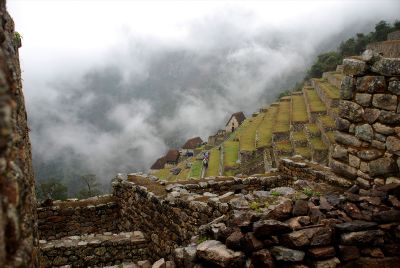
Not long ago, it was common to read a family’s vacation itinerary to include theme parks, beaches, and guided tours of museums or cathedrals. Nowadays, with the increased capacity to boldly go where few folks have gone before, family vacations are turning into, what Bella English refers to in her article in The Boston Globe as, mindful adventures.
Imagine gathering your family around for its weekly group-meeting — for the longest time I thought that every family did this — and dropping the v-word: vacation. I remember when my family told us kids that we were going to Disney World. Just a few months ago, the author’s family, even though the kids are now adults, got talking about Peru.
What a fascinating way for a family to travel, to go where one could open the eyes and the mind: ancient architecture, the Andes, Amazonian rainforests and anacondas. An adventure, to say the least, that forces you to think.
As a child, constantly terrified of all things interesting and cool, Disney World seemed my kind of place. However, more and more, I am starting to realize that the kids today are the ones wanting a challenge and to face fear,
With prodding from our son — who had seen enough churches and ruins — we signed up for a guided rafting trip on the Urubamba, which during the rainy season has some Class 4 rapids.
Yeah, young adults can be crazy, but to have parents willing to join paddle-battles with rapids is, to me, equally mind-blowing (even though I was raised by parents much more adventurous than myself). While reading this article, I just kept thinking: so, this is what family travel will look like?
It seems as though family vacations don’t have to be spent at Epcot Center anymore, you can jet-set and experience the real thing, together. It’s a small world, after all.
-
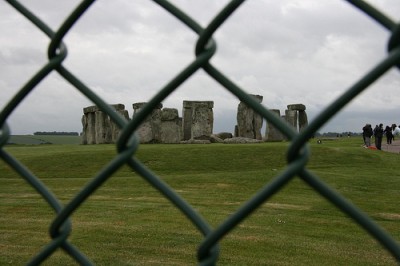
Stonehenge: A “national disgrace.” Did I miss something?
I’ve never thought of the remarkable prehistoric wonder as such, but a committee involved with the globally-known monument recently described it that way (as well as the Guardian and the Telegraph). The reason is that the million or so people who travel there each year are now forced to pay a fee and walk from their spot to a remote viewing platform near the noisy junction of two highways. Throwing elbows to catch a glimpse of the the circle doesn’t really appeal to me, either.
There are seven other destinations highlighted by Wanderlust that are threatened by too many people, bad planning, and poor security. The kicker? This is their second list. Are we beginning to lose too many places?
Picture this. Tulum, Mexico. The 1970′s peaceful Mayan fishing villages versus the “Girls Gone Wild”-Cancun ridiculousness. Nuff said.
The desert outside of Wadi Rum, Jordan, is being pummeled by the hodgepodge of tours seemingly playing by their own sets of rules. Yangsao, now a fixture on the Chinese tour group itineraries, is being run over by the over 3 million people visiting a year. Although biking is still a way to find some quiet, locals have sold out to entrepreneurs selling hordes of trinkets, and much of the cities charm in the meantime.
Despite surviving wars and earthquakes, Machu Pichu wasn’t designed to handle 2,500 people a day. The damage has led to its listing on the World Monument Fund’s endangered 2010 Watch list. Timbuktu is nearly off limits due to security concerns. The increased water usage at the golden fort in Jaisalmer, India, is literally dissolving the city’s sandstone foundations. Rough Guides describes the Bay of Fires in Tasmania, Australia, as a, “free for all.” Need I continue?
There is a silver lining, though. (Come on, I couldn’t leave you with too negative of a post.) The other side of the coin, destinations on the up-and-up, are on the rise. So, until the others get straightened out a bit, I would recommend the following.
With increasing economic and political stability, and paired with incredible safaris that have weathered the hard times, Zimbabwe is back. Northeast Thailand is still the biggest bang for your buck, and you can take full advantage of the 15% drop in visitors the region has recently experienced. Lastly, Madagascar’s increasing eco-tours are providing money for the locals as well as informally policing the wilds.
There’s still hope.
-
I have recently vowed to myself to do a bit more research on my future destinations before I arrive. Not of cafes or hostels, but of a place’s history. That way, I can gain a better appreciation while I’m there. And not just what I slept through in high school history class, ancient history, too.
We’ve all heard the legends of cities swallowed up by water, or left in ruins from epic battles that are scattered throughout the textbooks. Visiting a place that is millennia old, is an extremely powerful experience.
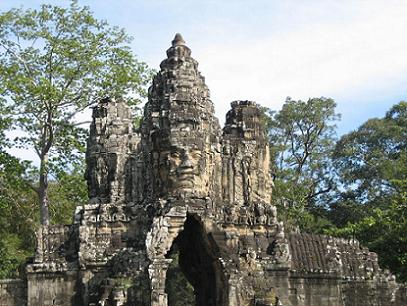
Although some of the stories of these ancient cities have yet to be proven, this Telegraph photo gallery takes you toto the remains of the cities you can visit right now. While in various degrees of ruin, you can wander through the remains of Troy, what has been rebuild of Babylon, and the more well known, and similarly stunning sites of Machu Pichu, Angkor Wat (pictured above), and others.
Who says traveling isn’t educational? My teachers would be so proud.
 THE PHILIPPINES
Having troubles planning a trip?
Book cheap hotels, flights and car hire on one site.
Cheap Paris Hotels, Cheap London Hotels, Cheap New York Hotels
 NEW YORK CITY
 SPAIN
SPAIN MEXICO
Online Hotel Reservations

Find and Book your Hotel!
- Hotels in Amsterdam
- Hotels in Venice
- Hotels in Rome
- Hotels in Paris
- How Many Americans Take A Gap Year?
- How Many Americans Have A Passport?
- What's The Longest Nonstop Flight In The World?
- 2010 In Review: Editor Maria Russo's Picks, Tips, & 2011 Travel Predictions
- How Many Days Can I Travel In [Insert Country Here] With $1,000?
- What You Need To Know About Couchsurfing
- Top 8 Free Things To Do In New York City This December
- Top 10 Alternative Sights In Rome
- The Early Bus To Baguio
- Top 7 Free Things To Do In New York City This Summer
- marusso1030 on Wednesday, December 22, 2010 @ 7:51 pm: Thank you Leslie and Jude! Oh, and Luke I thought we discussed you getting to the ears,...
- thebubblesaredead on Wednesday, December 22, 2010 @ 4:24 pm: What Luke said.
-
 Luke Maguire Armstrong on Wednesday, December 22, 2010 @ 12:51 pm: Heal the world? Ah, makes way more sense that way. All these years I thought...
 - Jude Polotan on Wednesday, December 22, 2010 @ 11:54 am: Enjoyed reading this, Maria!
- LeslieTravel on Wednesday, December 22, 2010 @ 9:44 am: Great post Maria. Look forward to reading your articles in 2011!
Asia/Pacific (27)
Europe (42)
North America (16)
South America (20)
season two
Southern Africa

Montreal

Dublin

season one
Colombia
Scandinavia
Argentina/Chile
ABC News
AU Sydney Morning Herald
AU The Australian
Boston Globe
CNN
Chicago Sun-Times
Chicago Tribune
Financial Times
JP The Japan Times
LA Times
MSNBC
Montreal Gazette
NZ The Herald
New York Daily News
New York Times
Newsday
St. Petersburg Times
San Francisco Chronicle
Toronto Star
The Travel Channel
UK The Guardian
UK The Independent
UK Telegraph
USA Today
Wall Street Journal
Washington Post
Yahoo Travel
ZA The Independent
AmericanWay
Budget Travel
Business Traveller
Condé Naste Traveller
Forbes Traveler
Hemispheres
National Geographic Traveler
Outside Magazine
Travel + Leisure
Smithsonian
BootsnAll
CheapOair Travel Blog
Concierge
Gadling
GoMad Nomad
GoNomad
Jaunted
Kathika
Literary Traveler
The Lost Girls
Matador Trips
Matador Television
On Our Own Path
Travelmag
TripFilms
Vagabondish
What's In Your Bag?
World Hum
YouTube Travel

Home | About Us | Submissions | Twitter
Copyright © 2025 The Expeditioner, LLC
The Expeditioner Network | The Expeditioner | What's In Your Bag?
