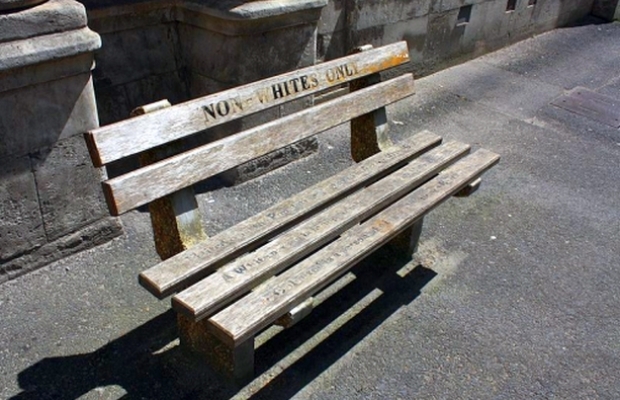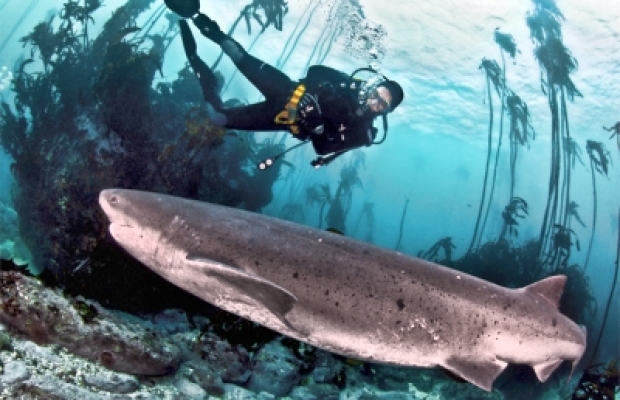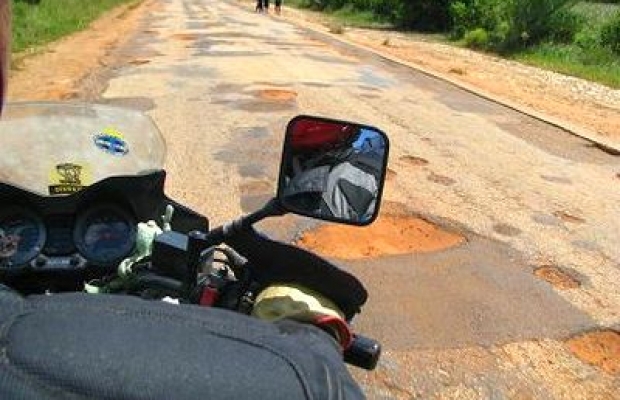
It’s a horrible analogy, but here it goes. Mozambique is to South Africa as Mexico is to the U.S.: Respites away from the home country where the currency goes further, the beaches go less visited, and the chance to get far away from it all is really not that far away at all.
This week the FT travels to Mozambique in an effort to highlight the attractions that World Cup goers can look forward to — especially with time to spare once their team is eliminated — when heading out of South Africa. As they point out, the ‘Bique (no one calls the country that by the way, but when they do, remember you heard it here first) is only a short plane ride or a few-hour car trip from most of the bigger cities in South Africa.
In fact, from personal experience, a road trip is highly encouraged. Heading south from the city of Nelspruit (the popular gateway to Kruger National Park), you can drive though the wooded highlands of Eastern South Africa, through scenic Swaziland, and be in the capital city of Maputo all in a day’s drive. From there, well, South Africa will likely be a distant memory, as well as your team’s loss.

I’ve come down with football fever and it might be from all the pre-World Cup coverage that is going on. Countries and companies across the world are promoting their teams everywhere from YouTube tonormal tube. There have been whole segments on the radio dedicated to soccer balls and fancy shoes.
An article in The Wall Street Journal predicts South Africa will host over 300,000 visitors for the games. My guess is things are going to get tight. Luckily, the article also points out spots to escape the frenzy, like the vineyards in Vergelegen.
Perhaps one would prefer to stay in Woodstock, Cape Town, one of the only communities in the city that avoided Apartheid, as recommended in an article in The New York Times.
Once an impoverished community — a “place you would come to get drugs” as a local Ms. Dudley explains — it is now thriving with art and delicacies. It boasts organic products at its Saturday Neighborhoods Market, and travelers can gander at the displays of prints at the South African Print Gallery.
Need some love? Ms. Dudley’s got a shop that slips a little Love Potion into the sandwiches (curiously a “garlicky dressing”.)
The World Cup. I couldn’t fathom the energy and excitement, nor the exhaustion that could ensue. Taking a break over a bottle of Syrah and a Love Sandwich might not be a bad idea.

No offense to the city of Johannesburg, but one thing you hear over and over when you’re traveling in South Africa is, “Fly in and leave, there’s nothing to do there.” Of course this is a bit of an exaggeration, but it is hard for the city to live up to the high expectations of travelers, what with everything else they’re seeing and doing while in the region. But if you do happen to find yourself in the city for more than a day or two, there’s probably nothing better you can do than take a trip to Soweto.
A short drive southwest from Johannesburg — the area’s name is short for South Western Township — there are many guides that will pick you up from your hostel or hotel and show you around the now very diverse township. The area was formed as a result of the influx of African workers looking for cheap housing at the end of the 19th-century, and grew to become a potent symbol of apartheid as black Africans were relocated there during the apartheid era.
As the NZ Herald explores, though apartheid is long gone, the area is still home to some of the worst living conditions and poorest of the population. However, as I learned while touring it, there is also a strong undercurrent of hope that pervades the area, with strong middle-class neighborhoods sprouting up, and even a high-end mall that Johannesburg is, unfortunately, so well known for.
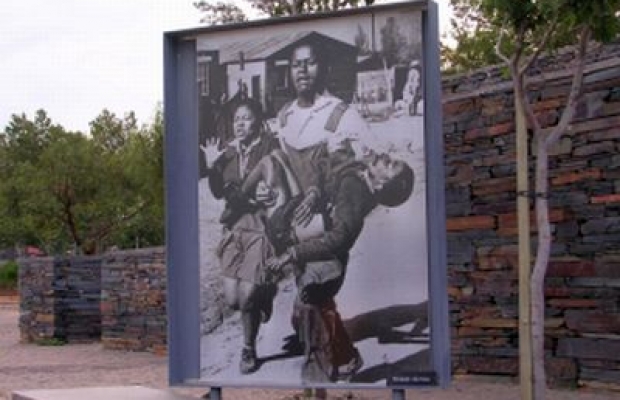
If you go, don’t miss seeing Winnie Mandela’s and Desmond Tutu’s homes, the Hector Pieterson Memorial Museum (pictured above), and Wandie’s Place, one of the city’s most famous restaurants, and whose site boasts that both Quincy Jones and Evander Holyfield have eaten there. You had me at Quincy Jones.
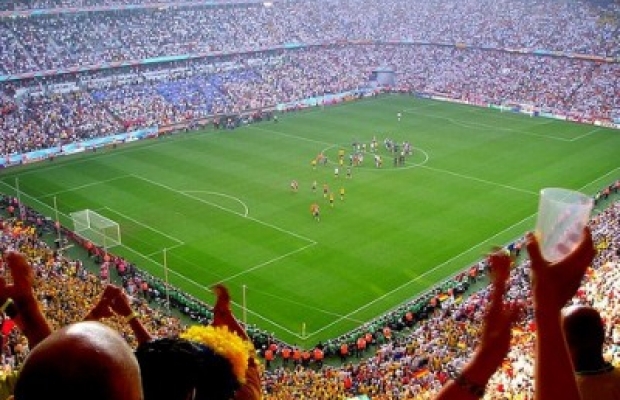
With neverending controversy and nearly everyone in Vegas betting on its failure, the World Cup is set and ready to roll. If you are lucky enough to get your hands on some tickets, know that we will be watching for you on TV, and wishing we were there too.
To put some finishing details on your trip to South Africa, BootsnAll has recently released a quality guide to the games to help you out. From complete guides on each of the nine host cities, to venue information, traveling tips, accommodation, an educated word on the travel risks, and possibly the most important guide of them all, the after-parties. Plus, it has links to all sorts of information, including a full match schedule.
One thing neglected on this page—how to paint your face like a true soccer fan. Bring on the footie!
On the first leg of my trip to Southern Africa, I headed to the eastern edge of the country to Kruger National Park, the massive wildlife preserve roughly the size of Israel.
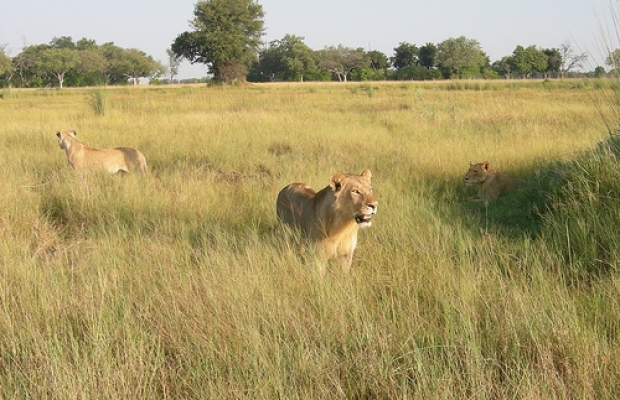
Kruger is one of the world’s best places for wildlife viewing. In this video I go in search of lion, while also catching glimpses of giraffes, elephants, rhinos, buffalo, hyenas, and baboons.
SOUTH AFRICA

With over 21 public reserves within its borders (not to mention the scores of others located in bordering Mozambique and Botswana), safariing in South Africa can be both accessible and affordable, you just need to know where to go.
The Sydney Morning Herald names their three top spots for game-watching and nature-gawking on the cheap.
1) Kruger: Home to the Big Five, Kruger is by far the country’s biggest park and has 12 camps spread about for you to crash in after a long day of hippo-watching. (That should be their motto, what do you think?)
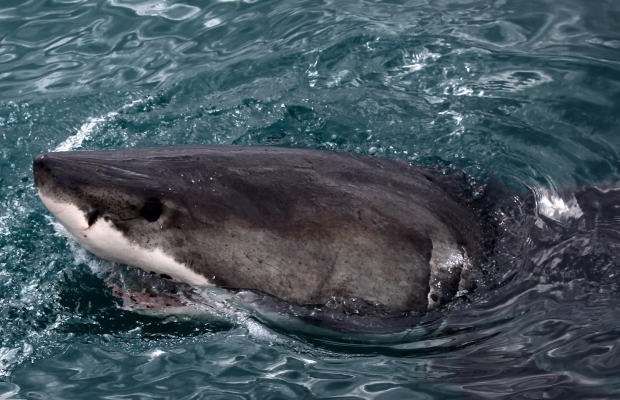
2) Addo Elephant National Park: One of the only parks in the country where you have the chance to glimpse southern right whales and great white sharks, tents can be had in this Eastern Cape preserve.
3) Kgalagadi Transfrontier Park: Emsbok (a big desert antelope) can be seen in this park located in the Kalahari; cabins running on solar energy are only natural in this desert outpost.

Kruger may be better known, but South Africa’s iSimangaliso Wetland Park has its fair share of wildlife, including hippos, Zambezi sharks, crocodiles, antelope, and over 500 species of birds.
Located in the northeastern part of the country, just south of Mozambique, iSimangaliso boasts five ecosystems and can safely be described as “South Africa’s answer to the Great Barrier Reef.” I get the sense that visiting here would be something like spring break for “Planet Earth” fans.
If you’re looking for a way to get away from the madding crowds in Cape Town, try these 8 alternative ways to see the city through a different lens.
By Lucy Corne
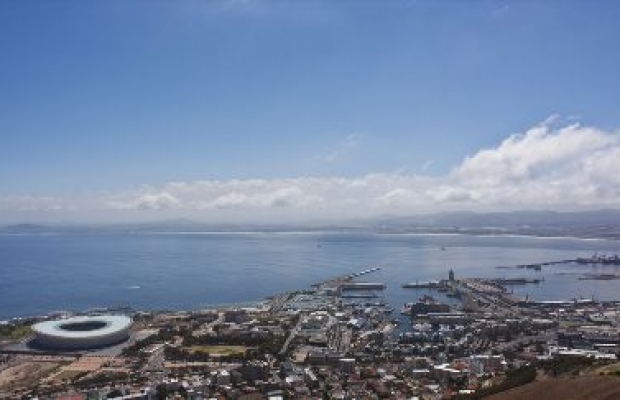
Cape Town is one of those places that everyone should visit in their lifetime. It has everything: natural beauty, a vibrant cocktail of cultures, belt-expanding food and wonderfully welcoming people. Many attractions have reputations that precede them — I’d heard of the Cape of Good Hope and Robben Island before I had any idea what or where they were — but what if you want to step off the beaten track? The main attractions are undeniably outstanding, but when the swarms of tourists get too much, you might want to seek out a quieter way to enjoy the “Mother City.” Here are eight alternatives to the tour bus favorites.
1) Follow the crowds: Take the cable car up Table Mountain
An original take: Hike to the top of Lion’s Head
Table Mountain tops most people’s list of things to do in Cape Town, but there are more options than just jumping on the revolving cableway to reach the mountain’s flat top. You could join the energetic travelers who hike to the 1,086-meter summit or, for a less congested hike, opt to scale nearby Lion’s Head. It’s a challenging hike that takes in narrow paths, steep drops and occasionally has you grasping on to chains to haul yourself up the rocks. Still it’s all worth it for the stunning views — in my opinion far superior to the vistas from the top of Table Mountain. Of course, since Lion’s Head is just a couple of kilometers away from the mountain, the panoramas are similar: ocean views and the city laid out beneath you. But seen from Lion’s Head you get an added bonus, Table Mountain is part of the view as well. If clambering to the top is not thrilling enough for you, book a paragliding tour and take the more adventurous route back to sea level.
2) Follow the crowds: Sip wine in picture-perfect Constantia
An original take: Down beer at the SAB Brewery in Newlands
South Africa is often associated with wine, but you don’t have to spend long in the country to realize that you’re in a nation of beer lovers. The Ohlsson’s Brewery in Newlands might lack the aesthetic value of the Constantia winelands just south of the city, but the informative tour through a fully functioning brewery makes up for the lack of prettiness. And of course, once the hour-long tour ends, the fun really begins as you’re left in the on-site pub to taste SAB’s many different brews. (more…)

Kruger National Park, the massive, 7,332-square-mile reserve in northeastern South Africa, is home to 517 species of birds and 147 species of mammals, including the Big Five (lion, leopard, buffalo, elephant and the rhino).
The best part? Don’t expect Kruger to be some sort of South Africa-Disneyland: “Kruger is not a glorified tourist trap, but a classical conservation showcase – there has been no need to invent Disney-type cartoon-mouse attractions here. Within its fences, ecosystems function much as they always have, with a little human tinkering here and there.”
No offense Yellowstone, but last time I was there I saw some geysers and a couple of buffalo. You’re going to have to do a little better than that to compete with Kruger. (Yes, I understand, this is not a competition.)
According to the park’s official site, the best time to go is surprisingly enough, during their winter (July to September): “This period is very dry in the bush with very cold night temperatures and therefore chilly during the early morning and late afternoon game drives. Game viewing is generally fantastic as the visibility is good and the game is concentrated around any water source.”
For a chance to really get away, there’s even some job openings there. And you thought your time spent in your cubicle was exciting.

Nestled against the eastern coastline of South Africa is Phinda Resource Reserve, a 57,000-acre reserve boasting the Big Five, 380 bird species and a coastline teeming with marine life.
The Independent Online has a great story of one woman’s trek into the bush to track down and catch a peek of one of the 50 rhinos that roam these grasslands. Apparently, to track rhino means you must be comfortable with both touching and smelling their feces, which is why I would probably never make it as a safari guide.

It’s South Africa, so everything about a trip there must be expensive, right? Wrong. I’m on the South African Airlines e-mail list, and every month there’s a new deal for flights from North America (New York/Washington) to Cape Town or Johannesburg for a little over US$1,000.00. You can sign up here.
If you’re heading to Cape Town (which is consistently ranked near the top of the Top 10 Cities in the world) there’s a ton of free places to see and things to do. Like most cities, if you visit during certain times of the year the museums are open to the public for free. (Museums in Cape Town vary from the National Gallery to galleries featuring contempory works.)
Cape Town’s most prominent landmark is of course Table Mountain, which is also home to the city’s largest national park boasting miles of trails (offering some of the best views of the city) which are free to the public.
For more tips on visiting Cape Town on the cheap check out this article.

Budget Travel came out with their 2008 list of the top 10 “new” places to visit this year which, by “new,” I think they mean “not overrun by tourists yet” rather than physical age. (I have a feeling Bergerac, France is probably not that new.) Here are a few highlights.
● Trying to get off-the-beaten-path in South Africa? Skip Cape Town and Johannesburg and explore
Graskop, the Berkeley of
South Africa. Just four hours from Johannesburg, this artist-friendly hamlet is home to an outdoorsy population which thrives on some of the best views in the country.
● Kick back and relax in the famed hot springs of Tanabe, Japan, and explore unblemished Japan at its best.
● Bypass Bordeaux and head to Bergerac, France, for some of the region’s best wines and exquisite meals. There’s also some sort of tobacco museum there, which Wikipedia so elegantly includes
in its city description with this:
“Bergerac . . .features a tobacco museum, at which no smoking is allowed.” I’ll stick to the wine, thank you.
MALAYSIA
ISRAEL
TRAVEL FOOD
THAILAND
TEACHING ABROAD
COUCHSURFINGFind and Book your Hotel!