 Three Tips To Getting Your Ski Deals This Season
 Ikea To Open 100 Hotels
 Help Haiti! Volunteers Responding To Matador.com's Call For Help
 Istanbul And Greece, Together At Last
 The Return Of Lonely Planet Cycling Guides
Lots Of People In The Online Travel Business Are Making Tons Of Money
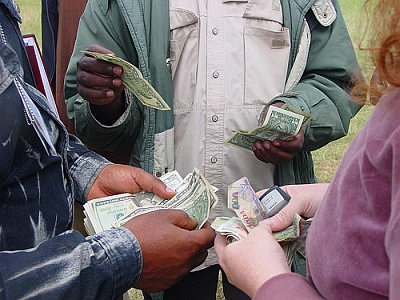
I don’t know if you’ve noticed, but recently, a lot of people in the online travel business have been making a lot — one could even say boatloads — of money. What, fellow travel blogger, you ask? Why haven’t you noticed much difference in your consistently depleting bank account (which, from the look of things, has an unusually large number of outlays to various airline carriers)? The reason is that you are likely not the founder of a hot new travel startup, which, as All Things D recently pointed out, is all the rage in the acquisition world right now.
On January 3, 2013, Room 77 announced that it had recently completed its third funding round — a whopping $30.3 million — with Expedia as the notable headline investor, with other blue-chip VC’s joining in, including Sutter Hill Ventures, Concur Technologies, General Catalyst Partners, Felicis Ventures, and a slew of of travel industry vets, including Expedia’s founder Rich Barton, former Expedia CEO Erik Blachford and Zillow CEO Spencer Rascoff. This, essentially for a piece of a hotel booking comparison site a la Kayak.
As All Things D notes, “[o]ver the past couple of months, Expedia acquired a 62 percent stake in a German travel site, Trivago, for $632 million; Liberty Interactive bought most of Barry Diller’s stake in TripAdvisor for $300 million; and Priceline acquired Kayak for $1.8 billion, shortly after the hotel-and-flight search site went public.”
What’s Going On?
So what’s going on here?
• Is this the result of a tech bubble? (Probably not, the number of venture-funded companies sold to acquirers in 2012 was down 11% from 2011 and 17% from 2010).
• Are these new companies flowing with money? (To put it into perspective, Priceline recorded 2012 revenue of $4.4 billion. Trivago is expected to record $132 million in revenue for 2012 — about 3% of Priceline’s revenue.)
• Have these companies stumbled upon a unique business model difficult to replicate? (A search of “hotel comparison sites” on Google yields a cool 556,000 results.)
• Is an early entry into the online travel sphere a recipe for continued success? (Maybe not. Many analysts have questioned the future of Trip Advisor, whose revenue missed targets last year, and whose business model based on reviews has come under increasing criticism.)
Follow the Money
The undeniable truth is that travel is still a big business, and a growing one at that. The money spent on travel & tourism around the world is estimated to be $1.2 trillion in 2011.
Further, that money is increasingly being spent online. According to the World Travel & Tourism Council, “[t]he global online travel segment [was] valued at nearly $256 billion in 2010 by PhoCusWright . . . From 2010-2012, global online travel bookings are forecast to accelerate twice as fast as the market overall, to reach $313 billion,” a nearly 20% increase.
In other words, the big players have their eyes on the big prize: that ever-increasing pool of money being spent on travel, an increasingly large amount that is being spent online with, arguably, just a few players. Couple that with the fact that travel booking and spending is being disrupted by new trends — comparison sites, home rentals, social media -and the reasoning is, if they’re not there already, they better be.
The Future?
Given this, keep an eye out for more acquisitions by the larger players, for more smaller players to begin to emerge in the “new” travel world (see the trends above), and for better or for worse, many more people in the travel business getting rich. The question is: who will it be? Here’s pulling for the overlooked (i.e., the travel blogger). You never know, crazier things have happened.
Posted on January 04, 2013 by Matt Stabile