



-
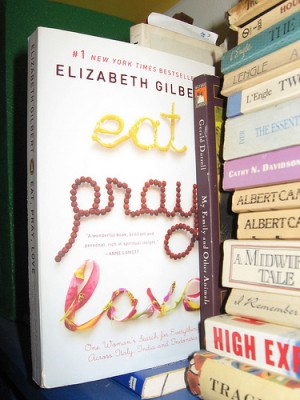
OK, I’m a dude, and I’ll admit that I just watched Eat, Pray, Love. In my own defense, I received an email from a friend that prompted me to do this, so it wasn’t under my own free will that I entered the theater (or maybe it was). Now, to avoid kicking a dead horse regarding this movie, it did serve me a purpose. Stay with me everyone.
Within my friend’s email was a Foreign Policy article, titled “Travel Writing is Dead.” The subheading read: Eat, Pray, Love was just the nail in the coffin. I’m still not sure what he was trying to tell me by sending me this — I like to think he meant well by it. The article came off a little hard, but brought up a point I’ve been swirling around in the recesses of my mind for quite a while. This particular post isn’t about how brutal the genre is and that it is an exercise of the past. I just couldn’t ever bring myself to write that, but let’s just say that I began an inner dialog surrounding what this modern version of travel writing has become.
-

With accessibility to the internet and traveling becoming a hobby, travel writers are not few and far between. Just the other day, someone asked, “Why do people want to write about travel? Travel writers are everywhere. Why don’t they do something different, something edgy?”
Truthfully, the question was humbling, and it wasn’t until I read Frank Bures’ review of Charles Dickens On Travel that I could formulate a cohesive answer, or at least a semi-cohesive.
For centuries — millenia, really — people have traveled the world. Whether it was in search of a new home or a new experience, people have been compelled to explore the Earth. It has only been until recently, in the grand scheme of time, that people have had the ability to communicate about their experiences. As Bures reflects on historical travel writing:
The point was to describe the world rather than to dance upon its stage. The purpose was to transport people to another part of the world in an edifiying, Victorian kind of way. It was something to make readers who couldn’t see the world become more worldly. It was more education than entertainment or art.
However, as Bures highlights, he stumbled across a literary figure that most do not associate with the travel section: Charles Dickens. By reading the compilation of the Victorian author’s notes, Bures found a voice that could describe the best of times and the worst of times a whole world over. He discovered, quite possibly, the first modern travel writer.
For a modern travel writer, the story is not found in the description of events but the meaning of experience. Making observations of the landscape and scenery can be interesting but, as Bures points out, there needs to be entertainment, there needs to be art. Excitedly, he found Dickens’ recounts of travel uplifting. “He is bending his ear for the absurd. He is reflecting on beauty and aging. He is turning his eye to the dynamics between people.”
So it is that travel writing needs a purpose, a point to the adventure, a story of sorts, a process of enlightenment — a suggestion always made by most established travel writers.
I took my notes.
-
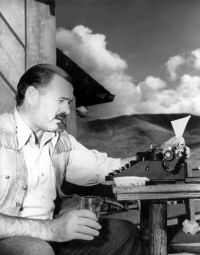
Sure, not everyone is a writer, but think about it, aren’t we all, to one degree or another, a travel writer? You may not write articles for some fancy, multi-billion dollar global conglomerate like the New York Times or TheExpeditioner.com, but think about it, how many of us write travel journals, send e-mails home, blog during their trip, or simply recount their travels to their friends?
Most everybody, which is exactly why it’s a good idea to take in a few good suggestions about travel writing. Stephen over at GoMad Nomad is listing his go-to tips for good travel writing.
1) Quotes: I’m always asking writers to try to include quotes in their pieces.
Me: “I love your submission, but do you have any quotes you can insert in your article to spice it up a bit?”
Anonymous Contributor: “Hi Matt, go F*%$ yourself.”
Haha, I jest, most writers have a ton of great quotes and love to include them, they just don’t think about how much this improves a piece. Think about it, what work of fiction have you ever read that doesn’t include quotes? Travel writing is no different from telling a good story, and people make a good story.
2) Details: Stephen starts off with the golden rule of all writing: get your facts straight. It’s one thing to know where you were, or what the name of the neighborhood was, but it’s another to know its history, its smell, its look, its . . . everything. Transporting the reader is about painting a picture, one with lots of small strokes.
For some other useful hints click through to GoMad Nomad.
-
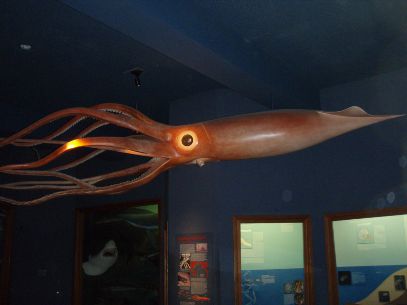
Twenty-foot walls of water, stomach-turning heaves, pbj sandwiches lost at sea. These are the trials and tribulations of one man´s quest to capture the Giant Squid, found off the shores of New Zealand.
WorldHum has just released an excerpt of David Grann´s new book, The Devil and Sherlock Holmes, a compilation of Grann´s travel essays. This particular excerpt is from a tale of Steve O´Shea, who continues to battle the seas, rain or storm, to capture this notoriously elusive creature. This is only one of 12 tales that are, in themselves, quests to understand the human condition of obsession. Other stories are about arsonists, murderous racists in prison, and con-artists — each one with its own insight into details of obsession.
Well, it captured my attention.
-
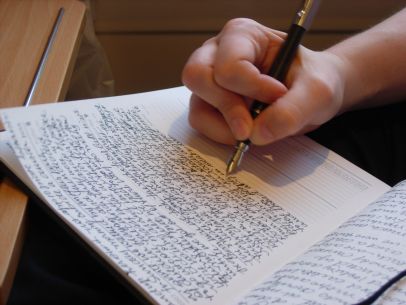
When you are a travel writer, you are living in two worlds. One world is based on the existential experience of belonging: finding out where you belong or how things belong. The other world is finding words to express that which you have discovered. Without one, you would not have the other, and most of the time, the worlds are conflicting. This existential dilemma is what Tom Swick poignantly and poetically outlines in his article at WorldHum. This thought came to him whilst seated, by himself, on a plane, looking at couples and families preparing for relaxing vacations and, essentially, not altering their normal lifestyle, just transferring it:
The travel writer, when thought of at all, is regarded as a charmed figure, never stymied in front of a customs officer or a computer screen. The travel writer, when he reflects, sees himself as aimless, clueless but nevertheless underappreciated.
The travel writer in the days of yore had a difficult task, but a different one. He would relay investigative information - perhaps from an ethnocentric perspective — back to his country, back to his home. Today, as Swift observes, the travel writer is faced with a difficult task, too: to find meaning in differences. He infers that YouTube and the increase in techno-travel blogs have made the basic travel book borderline obsolete. Perhaps it is the decline of travel literature as a marker of the travel writer´s introspective crisis. Despite being nearly moved to tears due to his heartbreaking accuracy, I found optimism in Swift´s words. Travel writers are faced with a challenge and maybe they will flounder or maybe the term will disappear from oversaturation. Yet, there is something in sharing experiences - with whoever will read them - that differs from merely seeing something from a tourist´s perspective, it is something worth writing for. As Swift´s article closes:
The travel book itself has a similar grab bag quality. It incorporates the characters and plot line of a novel, the descriptive power of poetry, the substance of a history lesson, the discursiveness of an essay, and the—often inadvertent—self-revelation of a memoir. It revels in the particular while occasionally illuminating the universal. It colors and shapes and fills in gaps. Because it results from displacement, it is frequently funny. It takes readers for a spin (and shows them, usually, how lucky they are). It humanizes the alien. More often than not it celebrates the unsung. It uncovers truths that are stranger than fiction. It gives eyewitness proof of life’s infinite possibilities. This is why you write it.
-

An interview with travel writer and author Thomas Kohnstamm
According to his website bio, Thomas Kohnstamm is a “writer, traveler and seeker of all that is odd, adventurous and ridiculous.” In his first book, Do Travel Writers Go To Hell, he takes readers through a healthy fixing of ridiculousness as he embarks on a debaucherous journey through Brazil as a Lonely Planet writer.
Before opening the book, I thought it would be akin to a Do They Serve Beer in Hell for travelers — a fun, shallow read. What you´ll find is more. The book is fun. It is ridiculous. It is, as the cover proclaims it to be, “A Swashbuckling Tale of High Adventure, Questionable Ethics & Professional Hedonism.” But under the surface of all the fun, Kohnstamm offers a philosophical depth and commentary on traveling, travel writing and the drive that draws people to the road. The characters he describes are real, and for everyone who has spent time in hostels, they are all people we have met. Likewise, the questions he raises: “What am I doing and why?”, are questions travelers grapple with frequently.
All this makes Do Travel Writers Go To Hell not just an enjoyable read, but an important read that will likely stand the test of time and weigh down traveler´s packs from Brazil to Botswana.
Continue reading TheExpeditioner.com´s exclusive interview Author Thomas Kohnstamm as he relates his experience as a travel writer and admits his unhealthy obsession with Scary Spice.
The Expeditioner: I was going to start by asking you what your favorite country and color is, but since my editor requested that I not ask any “lame” questions, why don´t we just start with: What is the most unquestionably immoral, sexually perverse, and ethically astonishing thing you have ever seen in your travels?
Kohnstamm: Brazil and the color green, but moving on . . . prior to becoming a travel writer I worked for a law firm on Wall Street where I saw immoral and ethically astonishing things that made everything from my travels pale in comparison. As for sexual perversion, the sex tourism in Northeastern Brazil and in Cuba ranges from creepy to tragic.
The Expeditioner: Your book takes the halo off guidebook writers (and in your case the most revered of all guidebook writers, the mythical Lonely Planet writer). Something I took away from the book was: the only difference between guide book writers and travelers is that after a night of partying the guide book writer needs to turn on his laptop to make some sense out of their previous day of chaotic debauchery. Did you get any negative backlash from Lonely Planet editors when the book came out? (more…)
-
The New York Times’ “Frugal Traveler,” Matt Gross, was in attendance at last night’s talk, “Travel Gets Social: The New World of Travel Media,” when discussions turned to the prospect of the future of travel journalism.
In a surprisingly candid, yet refreshingly sober, analysis of his own employer, Matt admitted that should the Grey Lady cease to exist one day, or at least cut back even more dramatically than it already has, he has often wondered what the demand in the the marketplace would be for a stand-alone Frugal Traveler site, with reader-based instructions as to where to go and what to do.
Payment, he mused, could be collected via a PayPal donation box on the site, with tourism agencies and readers alike supporting his travels. Kind of like the guys you see playing mariachi music in the subway on the weekends.
What do you think? Is this the future for Matt? Is this even a viable idea? Haven’t people tried this before?
In my opinion, as good as Matt is, the sad reality is that it’s often the name way above the byline that draws the readers. There will always be excellent independent travel publications (whoo-hoo) and bloggers, but let’s face it, it takes something like the New York Times to really draw the eye-popping number of readers and advertisers.
It’s up to the Times to adapt to the times, and not up to its writers, if quality travel journalism is going to survive in the future. Otherwise, time to snap up the URL: www.thefrugaltraveler.com
-
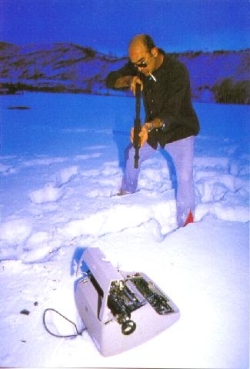
I was sitting in my regular bedroom at my computer in my quaint, charming, rustic hometown of Brooklyn, New York, with my dog, Wilson, at my feet when I came across David Farley’s article on how to avoid writing bad travel articles.
Some of his more useful tips include not immediately interjecting you and your companion (like your dog) into your opening, avoiding clichés to describe a locale, and drifting around without coming up with some sort of angle to anchor your story.
And like any good writer knows, immerse yourself in the works of talented authors and helpful “how-to books”; for travel writing David recommends Don George’s, for general travel writing, I’d recommend Rolf Potts, Anthony Bourdain, and David Foster Wallace.
As soon as I finished reading his piece, I couldn’t help but think to myself how much I looked forward to returning and reading it once again.
-
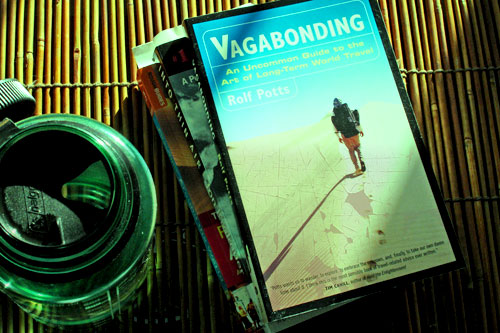
Rolf Potts, travel advice columnist and champion of the resistance band reflects on his travels over the past 10 years and his thoughts on the future of travel and travel writing in an interview on World Hum.
Rolf describes how David Foster Wallace’s 1996 genre-bending essay on cruise travel helped set the tone for travel writing in the decade ahead, and how globalization has hampered the ability of travel writers to discover uniqueness in a world of ubiquitous pop-culture.
Potts also bemoans the loss of quality travel editors in the wake of the newspaper industry’s financial woes, which to me signals the inevitable rise of independent, non-media conglomerated publications online dedicated to the love of travel. This is, of course, as Rolf points out the point of travel writing: a medium to discover truth in the world.
-

Last night the New York Times travel writer, Matt Gross (a/k/a The Frugal Traveler), stopped by Idlewild Bookstore, the new travel bookstore here in New York, for a talk about his recently wrapped up “Grand Tour”
of Europe, his thoughts on the idea of travel writing, and his plans (or lack thereof) for next summer. Some highlights:First of all, I’ve got to say, this new bookstore is a must-visit for any traveler to New York. Just minutes from Union Square, the recently opened Idlewild sits on the second floor of an old manufacturing building and overlooks 19th Street. Inside, floor-to-ceiling windows dramatically grace the front of the store, allowing in as much sunlight as possible from the cavernous-like side-streets of the Flatiron district. The hook is that the books, both travel and fiction, are grouped by country rather than author, allowing you to load-up on a country’s literature along with the basic travel guides (next to the Colombia Lonely Planet guide was Gabriel Garcia Marquez’s entire catalog, and one shelf down I found Cortázar and Borges mixed in with the Argentina and Patagonia guides).
I’m so jealous: this is the store I wanted to open one day, except mine would’ve been in Williamsburg, Brooklyn, and it would double as a coffee shop (and later on, after its immense success, I would install a vast array of security cameras and spend my later days as a recluse holed up in the penthouse suite above, watching my customers from a wall of digital screens and collecting my bodily fluids in glass jars).
Back to the talk. Matt spoke for about an hour, beginning with some anecdotes from his summer trip. The idea of the Grand Tour was to try to recreate the tours the wealthy British would do in the 19th century, except his would be neither British nor wealthy. For example, the British of the day would often throw lavish parties in Paris and invite all of the city’s aristocrats so as to attempt to pick up the customs and manners of French high-culture. So Matt threw a party too, except his was pot-luck and was attended by friends and colleagues and was probably actually fun to attend.
Matt also spoke about his beginnings as a travel writer, which began when he left for Vietnam after college to write a novel about living in Vietnam. Instead, after a failed pitch to the NYT, Matt was contacted later on by them to write three articles about living in Vietnam. The NYT was in need for a replacement for their Frugal Traveler column, and a few months later he was it and he hasn’t looked back since.
Matt revealed that he’s now hard at work on his first book, which is tentatively going to be called “The Frugal Traveler Guide To Travel,” and which will include his practical advice for travel (use a Capitol One credit card — they don’t charge fees for foreign ATMs) to the not-so-practical (don’t go to bars in Vietnam where the maître-de is a dwarf dressed in a tuxedo — duly noted).
Also, more surprisingly, Matt told the audience that with the impending birth of his first child he’s doubtful that he’ll be doing another trip next summer for the NYT (trips in the past have been an around-the-world voyage and a U.S. road trip).
So there you go travel writers, sharpen your pencils and break out your résumé, stop by Idlewild when you’re in NYC, and be sure to check out Matt’s blog for some inspiration next summer.

Online Hotel Reservations

Find and Book your Hotel!
- Hotels in Amsterdam
- Hotels in Venice
- Hotels in Rome
- Hotels in Paris
- How Many Americans Have A Passport?
- Q&A;: A Taste Of The Dordogne With Author Kimberley Lovato
- How Many Days Can I Travel In [Insert Country Here] With $1,000?
- What's The Longest Nonstop Flight In The World?
- What You Need To Know About Couchsurfing
- Matador Network Launching Magazine (Print That Is)
- Top 7 Free Things To Do In New York City This Summer
- Wednesday Travel Deals (Denver, Tokyo, Barcelona)
- Top 5 Spots For Street Food In Paris
- Top 10 Alternative Sights In Rome
- edresearcher on Monday, November 1, 2010 @ 7:33 pm: I've been to Europe many times, but I went to London only once. I found it uninteresting...
- edresearcher on Monday, November 1, 2010 @ 7:32 pm: I've been to Europe many times, but I went to London only once. I found it uninteresting...
- The_Rolling_Stone on Sunday, October 31, 2010 @ 8:42 pm: In my experience, the two sometimes go together.
- deputu on Sunday, October 31, 2010 @ 12:28 pm: Wow.. so cheap in India. I just know that. Nice info.
- mukuba2002 on Sunday, October 31, 2010 @ 8:05 am: great stuff a print magazine also that is cool
Asia/Pacific (26)
Europe (41)
North America (15)
South America (20)
season two
Southern Africa

Montreal

Dublin

season one
Colombia
Scandinavia
Argentina/Chile
ABC News
AU Sydney Morning Herald
AU The Australian
Boston Globe
CNN
Chicago Sun-Times
Chicago Tribune
Financial Times
JP The Japan Times
LA Times
MSNBC
Montreal Gazette
NZ The Herald
New York Daily News
New York Times
Newsday
St. Petersburg Times
San Francisco Chronicle
Toronto Star
The Travel Channel
UK The Guardian
UK The Independent
UK Telegraph
USA Today
Wall Street Journal
Washington Post
Yahoo Travel
ZA The Independent
AmericanWay
Budget Travel
Business Traveller
Condé Naste Traveller
Forbes Traveler
Hemispheres
National Geographic Traveler
Outside Magazine
Travel + Leisure
Smithsonian
BootsnAll
CheapOair Travel Blog
Concierge
Gadling
GoMad Nomad
GoNomad
Jaunted
Kathika
Literary Traveler
The Lost Girls
Matador Trips
Matador Television
On Our Own Path
Travelmag
TripFilms
Vagabondish
What's In Your Bag?
World Hum
YouTube Travel

Home | About Us | Submissions | Twitter
Copyright © 2025 The Expeditioner, LLC
The Expeditioner Network | The Expeditioner | What's In Your Bag?
